Browse Items (1193 total)
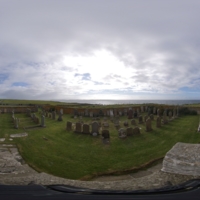 Graveyard
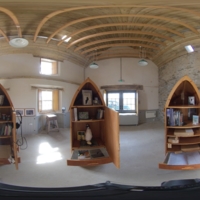 Inside Building
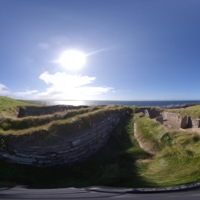 Building
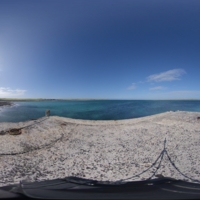 Pier
Pier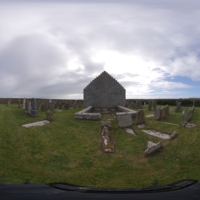 Graveyard
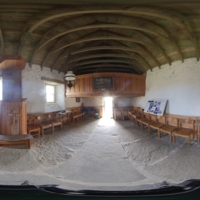 Church
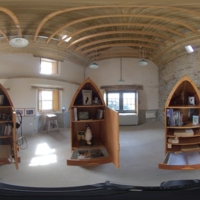 Inside Building
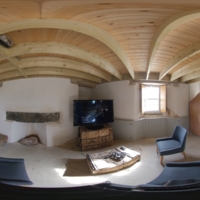 Inside Building
 Beach Video
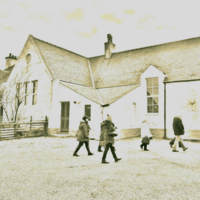 Comann Eachdraidh Uibhist a Tuath
CEUT was formed in 1989 and has over 300 members and 50 active volunteers. In 2017 CEUT became a SCIO prior to purchasing Carinish Old School.
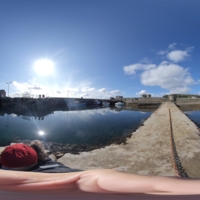 New Pier, Elwick Bay
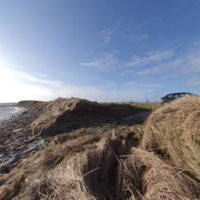 Westray, Orkney
Westray is one of the Orkney Islands in Scotland, with a usual resident population of a little over 550 people.
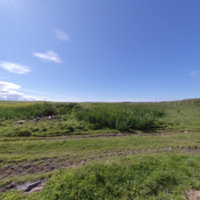 Ronaldsay, Orkney
A tour of North Ronaldsay.
 Sanday, Orkney
Sanday is one of the inhabited islands of Orkney that lies off the north coast of mainland Scotland.
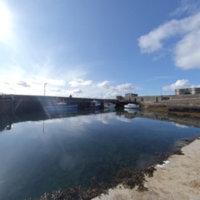 Shapinsay, Orkney
Shapinsay is one of the Orkney Islands off the north coast of mainland Scotland. With an area of 29.5 square kilometres (11.4 sq mi), it is the eighth…
 Old Pier, Elwick Bay
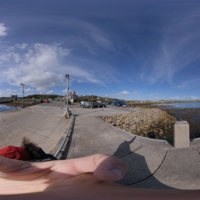 19th Centruy Pier, Elwick Bay
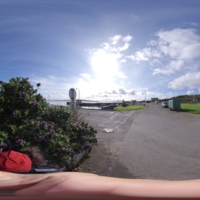 The Lodge
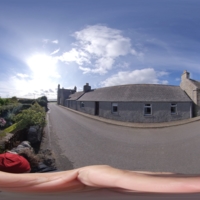 Balfour Village
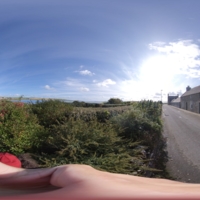 Balfour Village
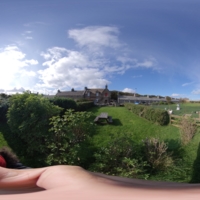 Balfour Village
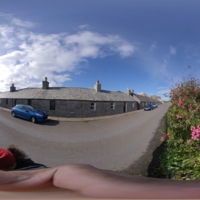 Heritage Centre
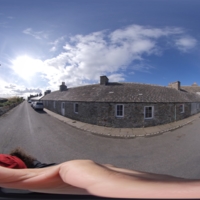 Elwick Bay
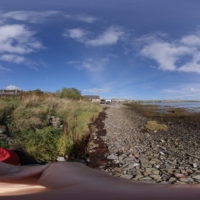 Elwick Bay
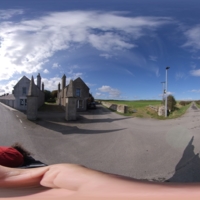 Gate to Balfour Castle
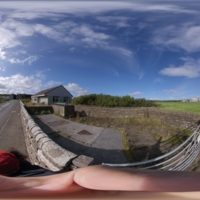 The Gas House
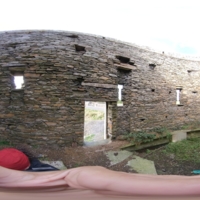 Inside The Gas House
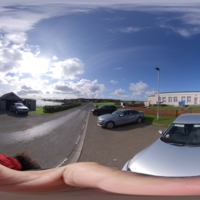 Outside the School
 Development Trust Office
 Elwick Bay
 Elwick Bay Beach
 Elwick Mill
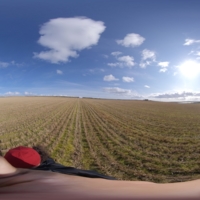 Barley Field
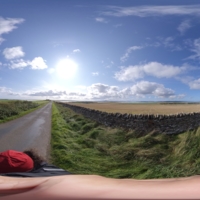 Shapinsay, Orkney
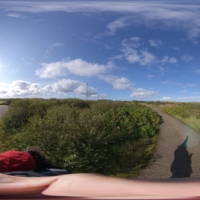 Milldown Reserve Carpark
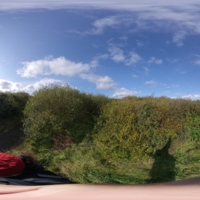 Shapinsay, Orkney
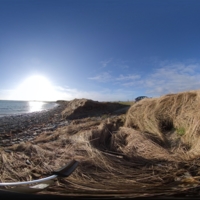 Westray, Orkney
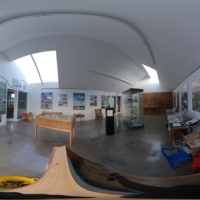 Westray Heritage Center
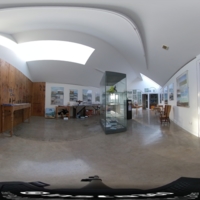 Westray Heritage Center
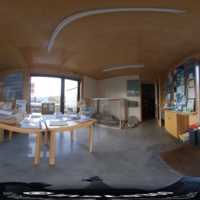 Westray Heritage Center
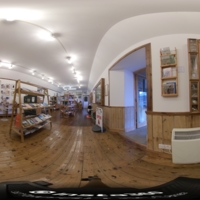 Westray Heritage Center
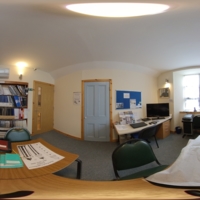 Sanday Heritage Centre
The Heritage Centre is situated in Lady Village in the formal Temperance Hall and was opened in May 2014. The main areas of display are Natural…
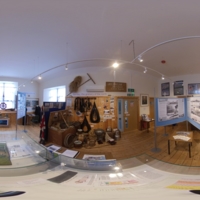 Sanday Heritage Centre
The Heritage Centre is situated in Lady Village in the formal Temperance Hall and was opened in May 2014. The main areas of display are Natural…
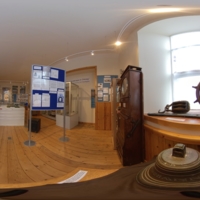 Sanday Heritage Centre
The Heritage Centre is situated in Lady Village in the formal Temperance Hall and was opened in May 2014. The main areas of display are Natural…
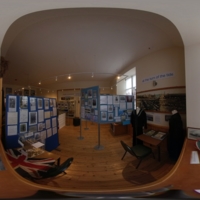 Sanday Heritage Centre
The Heritage Centre is situated in Lady Village in the formal Temperance Hall and was opened in May 2014. The main areas of display are Natural…
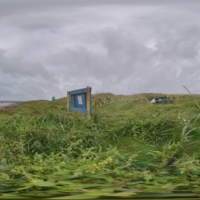 B98
B98The B98 was in the Battle of Jutland in the First World War. Latterly it was using as the mail boat for the German Fleet interned at Scapa flow. then…
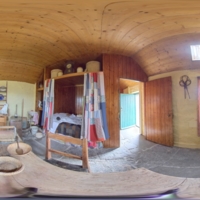 Croft, Sanday, Orkney
The Croft, whose inhabitants left in 1966, was taken over by the Heritage Group who, in 2011 started renovating the interior. The first image in of…
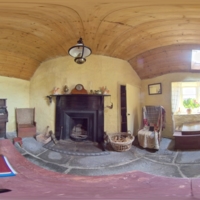 Croft, Sanday, Orkney
The Croft, whose inhabitants left in 1966, was taken over by the Heritage Group who, in 2011 started renovating the interior. The first image in of…
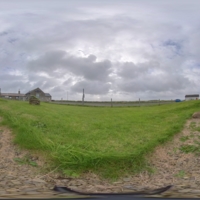 Burnt Mount, Sanday, Orkney
This is a reconstruction of the Burnt Mound which was re-excavated from the shore below Meur in the north of the island.
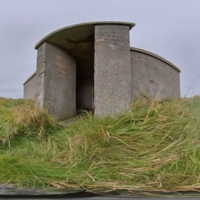 Brickie Hut / Cata Sand, Sanday, Orkney
This was taken in front of the Brickie Hut, a control room in World War II, for a dummy airfield on the Plain of Fidge. It over looks Cata Sand and…
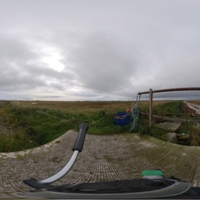 Black Rock Jetty, Sanday, Orkney
The Black Rock Jetty was built to transport mail and passengers by boat to and from North Ronaldsay. With the onset of the plane it was no longer put…
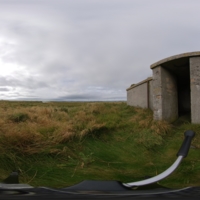 Sanday, Orkney
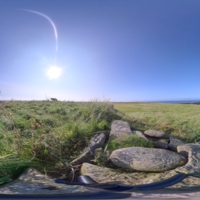 Whitemill Bay, Sanday, Orkney
This image was taken on top of the ruined cairn at Whitemill Point showing part of the wreck the ‘Wanga’ which came ashore in 1939. The stretch of…
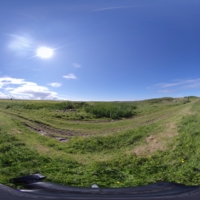 Behind Westness
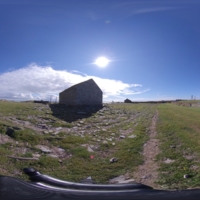 Bowan
Bowan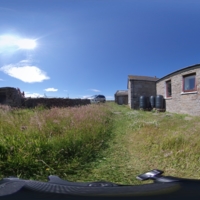 Breckan Garden
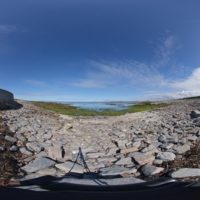 Cliffs Westness
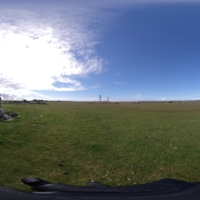 Dennisness
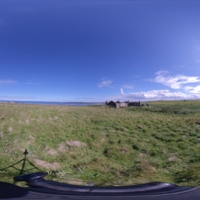 First Hill Westness
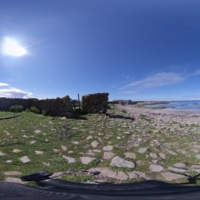 Gate at Westness
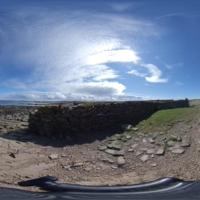 Hangie Rock
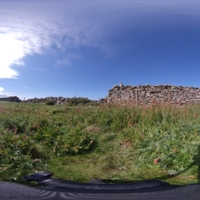 Ronaldsay, Orkney
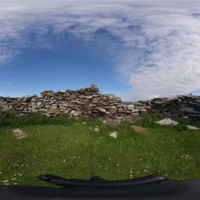 Inside Crus
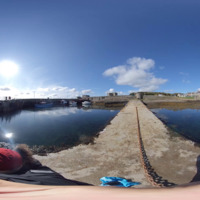 Shapinsay Pier
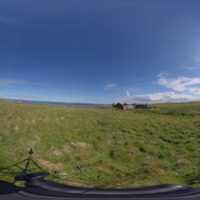 North Ronaldsay Videosphere 1
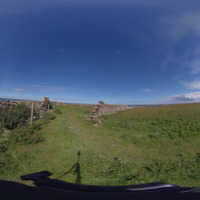 North Ronaldsay Videosphere 2
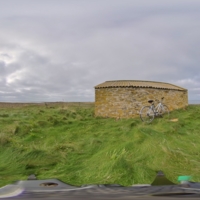 Startpoint Lighthouse
Film taken looking towards the tidal island of Start Point off Sanday. The first beacon was a masonry unlit tower. Then in 1806 a new lighthouse…
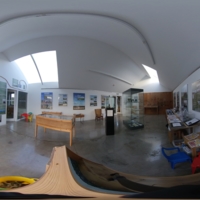
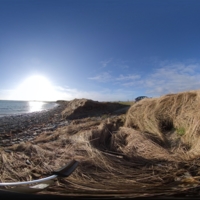 Westray Heritage Center
 Westray Heritage Center
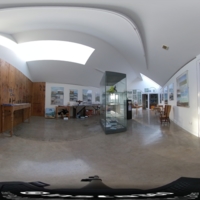 Westray Heritage Center
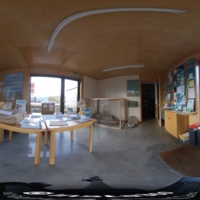 Westray Heritage Center
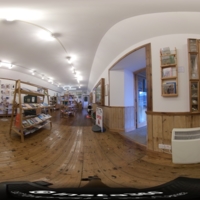 Westray Heritage Center
 Westray Heritage Center
 Westray Heritage Center
 Westray Beach Video
 Westray Video Sphere
Through a Glass Darkly - Digitisation of the Bridges Collection (a collection of Cypriot antiquities held at the University of St Andrews). Funded…
Polar bear skull from the collections in the Bell Pettigrew Natural History, part of the Museums of the University of St Andrews.
Porpoise Skull - Bell Pettigrew Museum Teaching Collection
Black Bear Skull - The Bell Pettigrew Museum Teaching Collection
Chimpanzee skull from Bell Pettigrew Natural History Museum handling collection for mammology studies
Shetlanders wore knitted hats when off fishing, and the the multicoloured patterns contrasted with the brown oilskins and boots they wore. Visitors to…
Whales are common in the North Atlantic, and since ancient times people have used their meat and oil. In regions with no trees, bones were fashioned…
Tradional Shetland farmsteads had outbuildings connected to the house, so people could go through to the byre to tend to the cattle, even in the…
Traditional fishing gear had two main parts – a baited hook to catch the fish, and a weight to sink the line into the sea. This is a specialised…
Around 1900 hundreds of Shetlanders left their native home. It was a time of hardship but also opportunity. People settled elsewhere in Britain, or…
Corncrake birds lived in Shetland for thousands of years, nesting in cornfields. However, they have nearly disappered from the islands for over thirty…
When off on a boat trip, people used this kind of box, known in Shetland as a bøst, to carry food or fishing flies. These boxes were made around…
Jaundice is a symptom, rather than a disease. Shetlanders used folk-remedies to try to cure the condition. One way was to drink water from a stream…
Communication sped up throughout the twentieth century, but news wasn’t that new by the time it got to Shetland by sea. The wireless meant islanders…
Ammunition Pouch x 3. German equipment
German binoculars taken by the 5th Bn Seaforth Highlanders in 1945.
Piece of Adolf Hitler's desk. Removed from the Bunker beneath the Chancellery in Berlin by Lt Col Richard Broad MC, Seaforth Highlanders. The desk had…
Biscuit Box with biscuits sealed inside. Part of the Highlander’s Museum collection (Queen’s Own Highlanders Collection).
Steel helmet worn by Captain Rev F J L MacLachlan MC, Chaplain to the 1st Bn Cameron Highlanders, during the crossing of the Irrawaddy River on 19/20…
Side Drum - made for use by the Pipe Band formed by Prisoners of War. It bears the badge of the Seaforth Highlanders. Part of the Highlander’s Mueum…
Jersey made from scaps of wool by 2 Lt TD Scott, 4th Bn Seaforth Highlanders while a Prisoner of War.
Rifle heavily encrusted in marine silt. Photographed in situ in custom display box.
Despatch box used by Adolf Hitler. Removed from the Bunker beneath the Chancellery in Berlin by Lieutenant Colonel I F Anderson OBE MC, Seaforth…
German 'Schu' Mine used in the Italian campaign of 1944, captured by the 6th Bn Seaforth Highlanders. These small anti-personnel mines were…